Public affairs and campaign strategy in New Jersey
Our founder represented Newark’s West Ward for two terms on the Municipal Council, ran campaigns across Essex County for two decades and served as a senior appointee at the New Jersey Department of Education. New Jersey is where Rice Public Impact Group’s relationships run deepest and, with Washington, DC, where the firm’s work is focused today; Essex, Hudson and Union counties are where most of it lands.
Two decades in Newark and Essex County public life
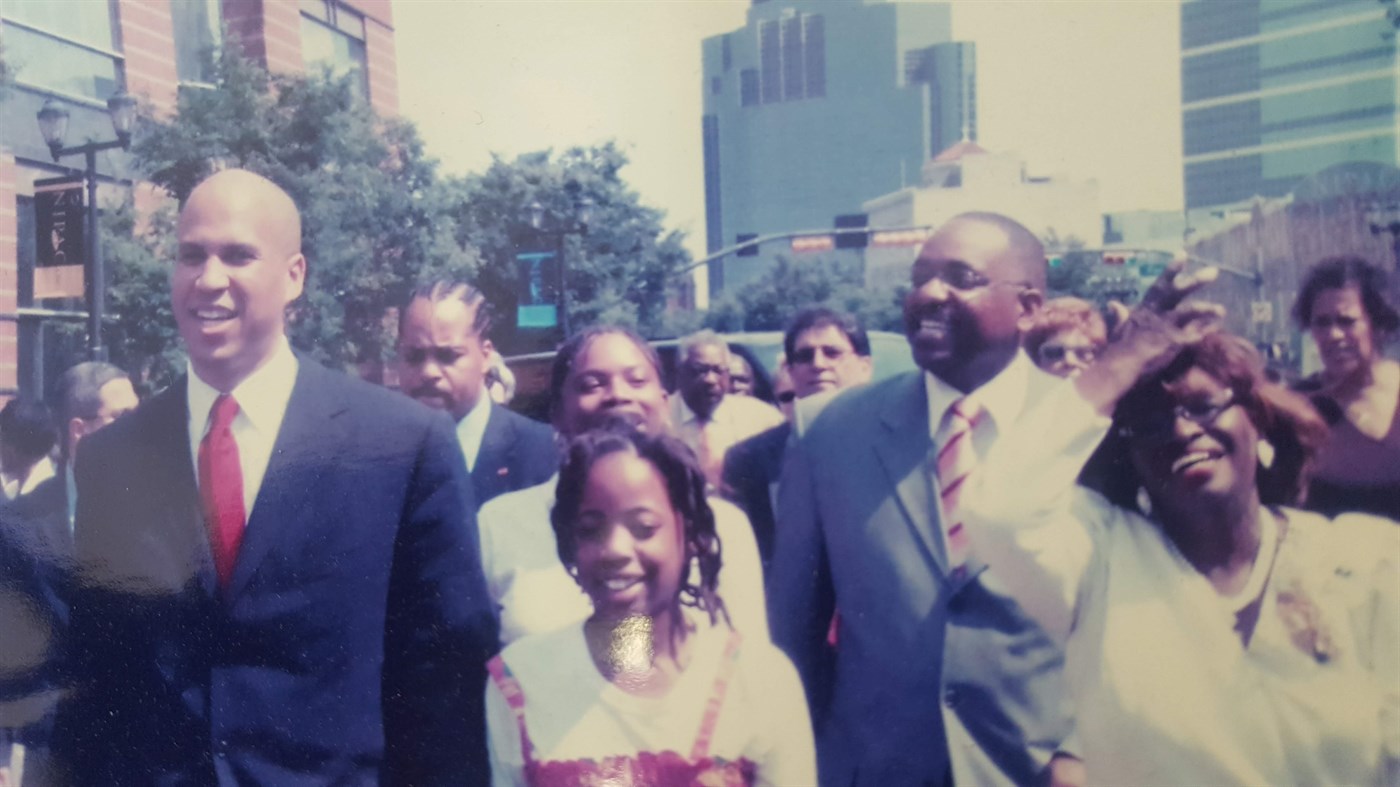
Ronald C. Rice was elected to the Newark Municipal Council in 2006 and re-elected in 2010, representing the West Ward. His legislation reformed the city’s ethics laws, rehabilitated abandoned properties, created the city’s Environmental, African and LGBT Commissions, installed speed-calming measures and, through a project labor agreement and a “Ban the Box” ordinance, put residents to work. He created his ward’s Education Support Committee and supported the growth of Newark’s public charter schools, from TEAM and Uncommon Schools to community charters such as Marion P. Thomas, Lady Liberty Academy and Adelaide Sanford.
Before the council he served at the New Jersey Department of Education as Special Assistant and Chief Policy Analyst for the Commissioner’s Chief of Staff, where he oversaw the regulations that carried out the Supreme Court’s Abbott v. Burke decision for the state’s 31 special-needs districts, and as the department’s spokesman and its coordinator for the Regional Day Schools.
He learned campaigns running his father’s races for council and the State Senate: Senator Ronald L. Rice, the longest-serving African-American state senator in New Jersey history. He was youth coordinator for Sharpe James’s first winning campaign for Mayor of Newark, Assistant Essex County Coordinator for Governor Jim Florio’s re-election, the first African-American President of the Essex County Young Democrats and Essex County Coordinator for Obama for America in 2008. He has chaired the Joint Meeting of Essex and Union Counties and served on the boards of Newark NOW and the Essex County Municipal Council Exchange.
Trenton, the counties and 564 municipalities
New Jersey layers a full-time Legislature, 21 counties and 564 municipalities on top of one another, each with its own election calendar, and the state’s campaign finance and lobbying rules are administered by one agency. The short version:
- The Legislature
- Forty senators and eighty Assembly members from 40 districts, meeting year-round in Trenton in two-year sessions. Assembly members serve two-year terms and senators four, with a two-year term after each redistricting. Legislative and gubernatorial elections fall in odd-numbered years, so they never share a ballot with Congress or the presidency; the whole Legislature is on the ballot in November 2027.
- The Governor
- A four-year term, elected the year after a presidential election; the next governor’s race is 2029. The Governor appoints the cabinet, including the Commissioner of Education, with Senate consent, and holds a line-item veto over appropriations. The state fiscal year begins July 1, so the budget fight peaks every June.
- Lobbying
- The Election Law Enforcement Commission (ELEC) registers governmental affairs agents, the state’s term for lobbyists, and their clients, and takes quarterly and annual reports. The registration test turns largely on hours spent lobbying in a calendar quarter rather than on a dollar figure, which surprises advocates used to Maryland’s thresholds, and the rules reach grassroots communications as well.
- Pay-to-play
- New Jersey’s pay-to-play laws restrict political contributions by businesses that hold or seek public contracts at the state, county and municipal levels, and local governments may adopt stricter ordinances of their own. Campaign finance reports for state, county and municipal races are filed with ELEC.
- Elections
- Primaries are in June and general elections in November, with early in-person voting and vote-by-mail. County commissioners, sheriffs, surrogates and clerks are elected on partisan ballots in November; many municipalities elect on nonpartisan ballots on their own calendars, some in May and some in November.
- Schools
- Most school boards are elected in November, a few are appointed by the mayor, and the Commissioner of Education is the state’s only charter school authorizer. Newark’s schools returned to local control in 2018 after more than two decades of state operation, and the city has one of the largest public charter sectors in the country; Jersey City’s schools, the first the state ever took over, have since been returned to local control as well.
Structures and calendars are general and were written from the public record in October 2026. Confirm current dates, thresholds and rules with the Legislature, ELEC, the county or the municipality before relying on them.
Essex, Hudson and Union counties
Essex County
An elected County Executive and a nine-member Board of County Commissioners (the body that was the Board of Chosen Freeholders until 2021), with Newark, the state’s largest city, as the county seat. Twenty-two municipalities, from Newark, East Orange, Irvington and Orange to Montclair, Bloomfield, West Orange, Livingston and Millburn. Newark elects its mayor and nine-member council on a nonpartisan ballot in May every four years, most recently in 2026.
Hudson County
An elected County Executive and a nine-member Board of County Commissioners elected by district, with Jersey City, the state’s second-largest city, as the county seat. Twelve municipalities in all: Jersey City, Hoboken, Bayonne, Union City, North Bergen, West New York, Kearny, Secaucus, Harrison, Weehawken, Guttenberg and East Newark. Jersey City and Hoboken elect their mayors and councils on nonpartisan ballots in November of odd-numbered years.
Union County
A nine-member Board of County Commissioners elected at large, with an appointed County Manager running the government, and Elizabeth, the state’s fourth-largest city, as the county seat. Twenty-one municipalities, including Elizabeth, Union Township, Plainfield, Linden, Rahway, Westfield, Summit, Cranford, Hillside and Roselle.
Our founder has worked in all three: as a council member in Essex, as chair of a regional authority serving Essex and Union, and as a campaign strategist whose 40-plus races have run through every one of these counties’ city halls.
Work we take on in New Jersey
- Trenton and the counties. Government relations with the Legislature, the state departments and the county boards, from the landscape analysis and the stakeholder map to the hearing and the vote.
- Municipal, county and school board races. Pre-campaign assessments and campaign plans for council, mayoral, county commission, school board and legislative races, from someone who has run and won in Newark.
- Communities, congregations and charter families. Coalition building and engagement in the neighborhoods our founder has organized for twenty years, including Newark’s public charter school community.
- Leaders who need a public voice. Executive communications, positioning and storytelling for the nonprofits, schools and institutions that anchor these counties.
Tell us about your New Jersey objective
The bill, the race, the project or the community, which county it lives in, and when it will be decided. We will tell you where the work starts.